
Deadly Nairobi Floods Show Urgent Need for Climate Action and a Just Renewable Energy Transition
FOR IMMEDIATE RELEASE
Wednesday, 11 March 2026
Deadly Nairobi Floods Show Urgent Need for Climate Action and a Just Renewable Energy Transition
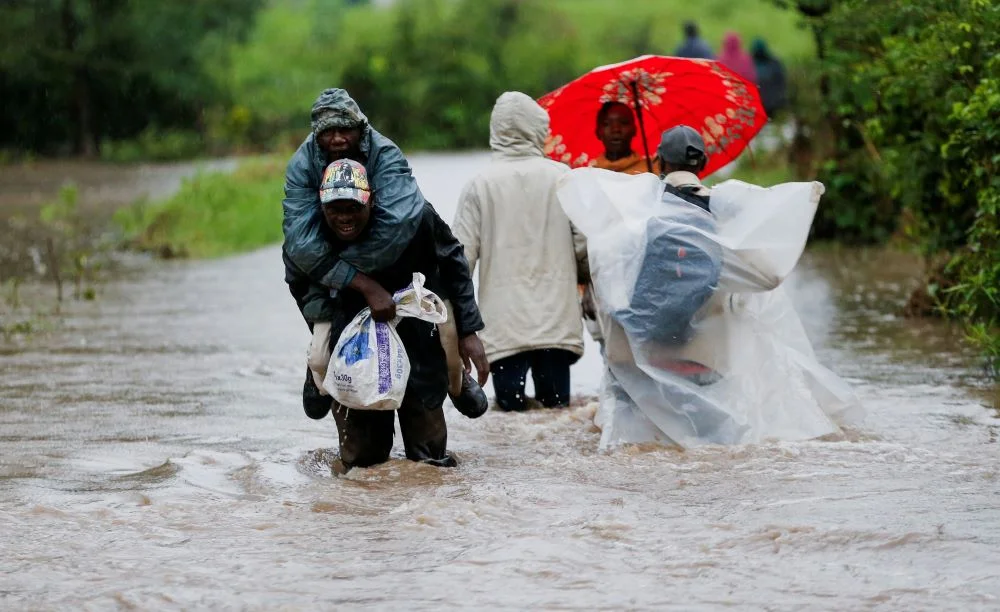 [Image sourced from: APA-Nairobi 11 March 2026]
Nairobi, Kenya—350Africa joins civil society organisations and climate advocates in expressing deep concern following the heavy rains and flash floods that claimed at least forty-two lives nationwide, including twenty-five in the capital, Nairobi. Entire neighbourhoods were submerged, vehicles swept away by rising waters, and families forced to flee their homes as rescue teams continue search and recovery efforts. Critical infrastructure, including roads and public services, was also damaged.
Scientists warn that climate change is intensifying extreme weather events in East Africa, making heavy rainfall and flooding more frequent and more severe. In its seven-day weather advisory published on Tuesday, 10 March, the Kenyan Meteorological Department said rains were expected to continue in Western Kenya, Central Highlands, Lake Victoria Basin, Rift Valley, South-eastern Lowlands and South Coast until Monday, 16 March.
“For many vulnerable communities living in flood-prone areas, these impacts are compounded by rapid urbanisation, inadequate drainage infrastructure, and limited investment in climate adaptation. A Just Energy Transition Is Critical. The Nairobi floods underscore the urgent need for governments and financial institutions to accelerate the shift away from fossil fuels and invest in clean, resilient energy systems. Continuing to finance fossil fuel projects risks worsening the climate crisis and increasing the frequency of extreme weather disasters, such as the floods currently devastating Nairobi. The floods submerging our communities are not just natural disasters; they are the tangible consequences of policy inaction. The failure to transition away from fossil fuels is a direct threat to our collective future, hitting the Global Majority first and hardest,” said Rukiya Khamis, East Africa Program Manager, 350Africa.
Renewable energy investments, such as solar, wind, and decentralised energy systems, can help build more resilient economies while expanding energy access, creating jobs, and reducing pollution.
Africa contributes the least to global greenhouse gas emissions yet remains among the most vulnerable to climate impacts. Communities across Kenya and the wider East African region are already facing severe droughts, floods, and food insecurity linked to climate change. Rapidly changing weather patterns are heightening economic vulnerability, placing millions at risk of displacement and poverty.
“The devastation we are witnessing today should serve as a wake-up call,” said Ashley Kitisya, Director of Africa, Laudato Si Movement. “We cannot continue down a fossil fuel pathway while communities are losing lives, homes, and livelihoods to climate disasters. Governments, development banks, and international financial institutions to: end support for new fossil fuel projects, increase investment in renewable energy and climate-resilient infrastructure, support communities most affected by climate impacts.”
***ENDS***
For media enquiries, contact:
Lynn Kamande
350Africa.org
+254707081681
Lynn.kamande@350.org